Dental Implants
Replacing a missing tooth, root and all
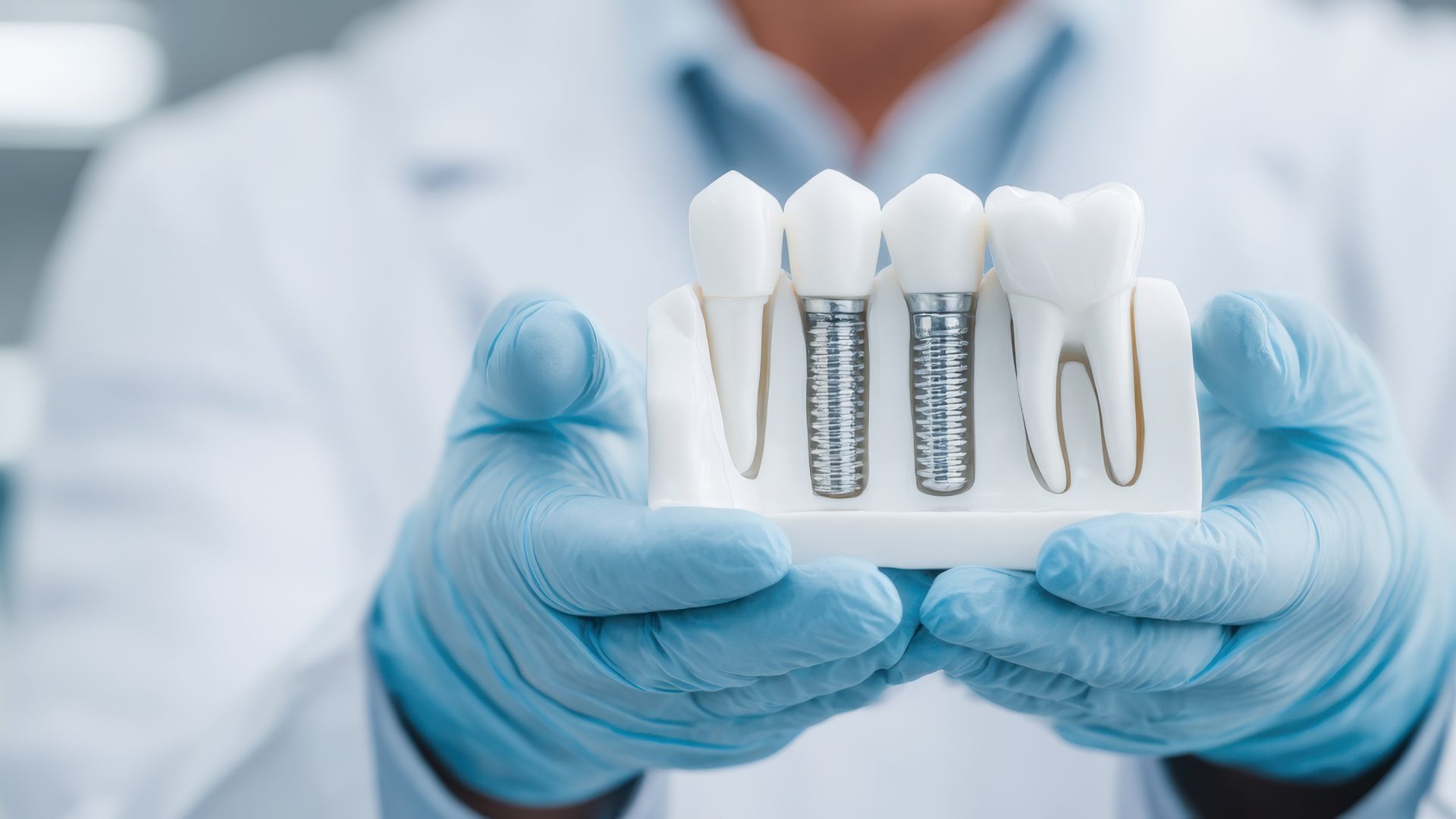
A dental implant replaces the whole tooth rather than just the visible part. A titanium post is placed in the jawbone to take the place of the natural root, and a custom crown is attached on top once healing is complete.
That distinction matters. Other options replace what you can see. An implant also replaces what sits below the gumline, which is why it functions so much like a natural tooth. We place implants at Roseborough Dental as part of the range of tooth replacement options we discuss with patients.
How an implant is placed
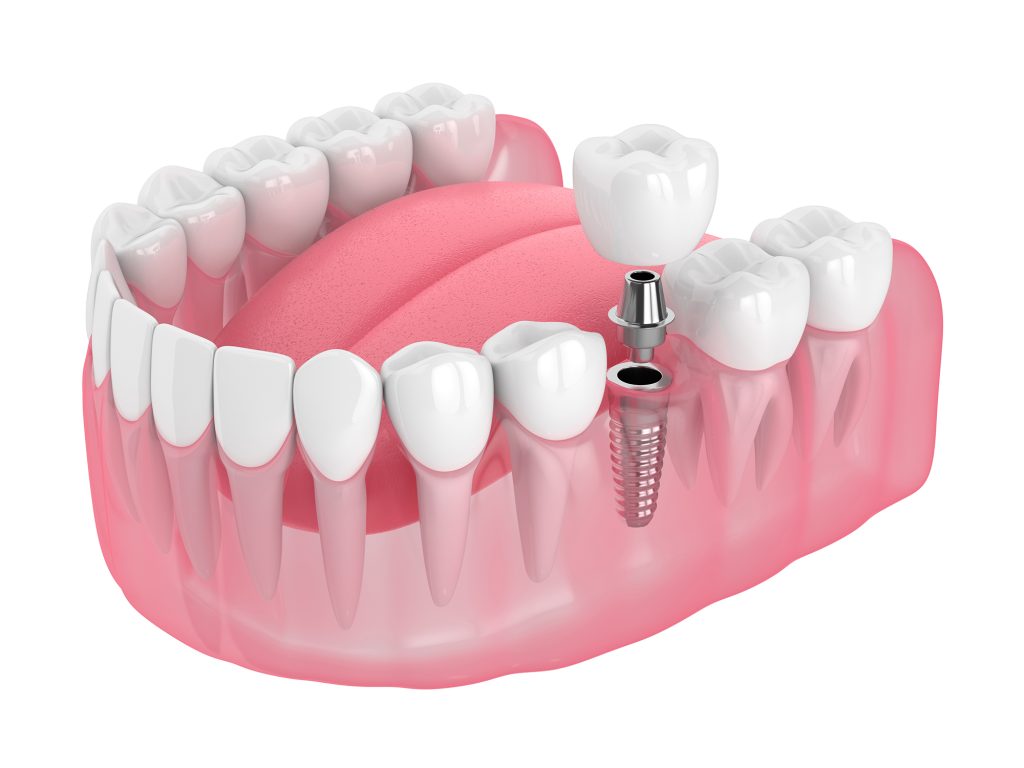
Treatment happens in stages over several months, because the bone needs time to heal around the post.
The post. The titanium post is placed into the jawbone. Over the following weeks it fuses with the bone, a process that gives the implant its stability. This healing cannot be rushed.
The abutment. Once fusion is complete, a small connector called an abutment is attached to the post, and your gums are given time to heal around it.
The crown. Your custom crown is then fitted to the abutment, shaped and shaded to match the teeth beside it.
Recovery varies between patients. Most people manage normal daily activity quickly, with the longer wait being the fusion period rather than discomfort. Once treatment finishes, you eat and drink normally.
Am I a candidate?
Many adults missing one or more teeth are, though it depends on several things we assess at a consultation: your overall oral health, the condition of your gums, how much bone you have and its quality, your medical history, current medications, and lifestyle factors that affect healing such as smoking.
Some patients need preparatory treatment first. Bone can shrink after a tooth has been missing for a long time, and if there is not enough to support a post, additional procedures may be needed before placement. This is not a reason to rule implants out, just something to know early rather than late. An examination and imaging give us the honest answer.
Options depending on how many teeth are missing
Single-tooth implants. One implant, one crown, without involving the healthy teeth on either side.
Implant-supported bridges. When several teeth in a row are missing, implants can support a bridge instead of placing an implant for every tooth.
Implant-supported dentures. For patients missing most or all of their teeth, implants anchor a full or partial denture, which reduces the movement that makes conventional dentures frustrating during eating and speaking.
Why implants protect your jawbone
Bone responds to use. A natural tooth root transmits the force of chewing into the jawbone, and that stimulation keeps the bone healthy. When a tooth is lost, the bone in that area stops receiving it and gradually shrinks.
An implant restores that transfer of force, which helps maintain the surrounding bone and the shape of your face over time. Preserving bone also supports the neighbouring teeth, since they depend on that structure too.
How implants compare with bridges and dentures
A conventional bridge relies on the healthy teeth either side, which have to be reshaped to hold crowns. An implant stands on its own and leaves those teeth untouched.
Removable dentures cost less up front and need no surgery, but they sit on the gums and can shift. Implants are anchored in the jawbone, so they stay put.
Implants ask more of you at the outset: surgery, several months, and higher cost. Bridges and dentures are legitimate choices, especially depending on your health, timeline and budget. We will talk through all three properly.
Caring for your implant
Implants need the same care as natural teeth, not special products. Brush twice daily with a soft-bristled brush, clean around the implant daily with floss or whatever aid we recommend for your situation, and keep up regular examinations so we can monitor the implant and the gum tissue around it. Avoid chewing ice or pens, which can damage the crown.
Gum health is what protects an implant long term, which is why routine visits matter after treatment as much as before.
Book a consultation at Eglinton and Creditview
Roseborough Dental has been at Eglinton and Creditview since 1991, seeing patients from Streetsville, Erin Mills and across North Mississauga. Call (905) 567-1231.